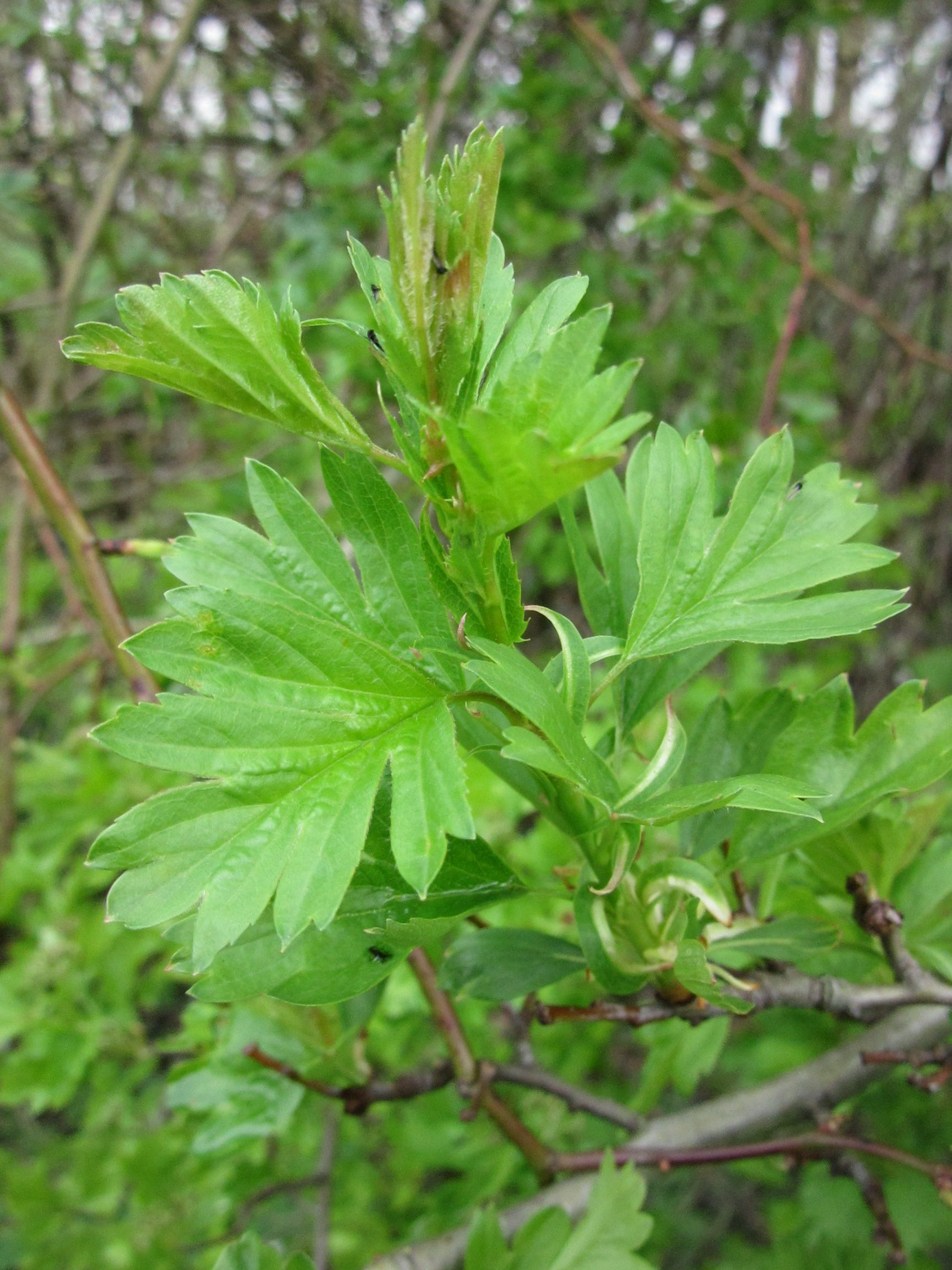
 In common with other plants nibbled by children, the young leaves of hawthorn (Crataegus monogyna) were widely known as bread-and-cheese.
We are grateful to a Poulton le Fylde, Lancashire, contributor who in June 2014 shared her her memories of when she was living in the Manchester suburb of Chorlton-cum-Hardy:
‘In 1943, during the Second World War, food was rationed. I was then aged 10 and together with my sister and two brothers enjoyed, in spite of the difficult war despite of the difficult war-time circumstances, a happy childhood. My very close friend Nita spent much of her spare time with me and my family. One day she called round to tell me that she knew a place where we could have some free bread and cheese. Collecting my bicycle and anticipating a small feast we cycled to a country lane a short distance from my home. Nita stopped an pointing at a large hawthorn hedge announced this was the bread and cheese that could be eaten. I was very cross and confused – I had expected a delicious cheese sandwich. I could not see any, I was upset that my friend had at that time played a trick on me, telling me to eat the hawthorn leaves. It was almost 70 years later that I learned … that indeed hawthorn leaves can be eaten and are known by some as bread and cheese.’
Image: Wandle Park, London Borough of Merton, April 2018.
 DISCLAIMER: The cures and other uses on this site are recorded as they were received.