Notes kindly supplied by Matthew Osland Barker, 26 July 2025:
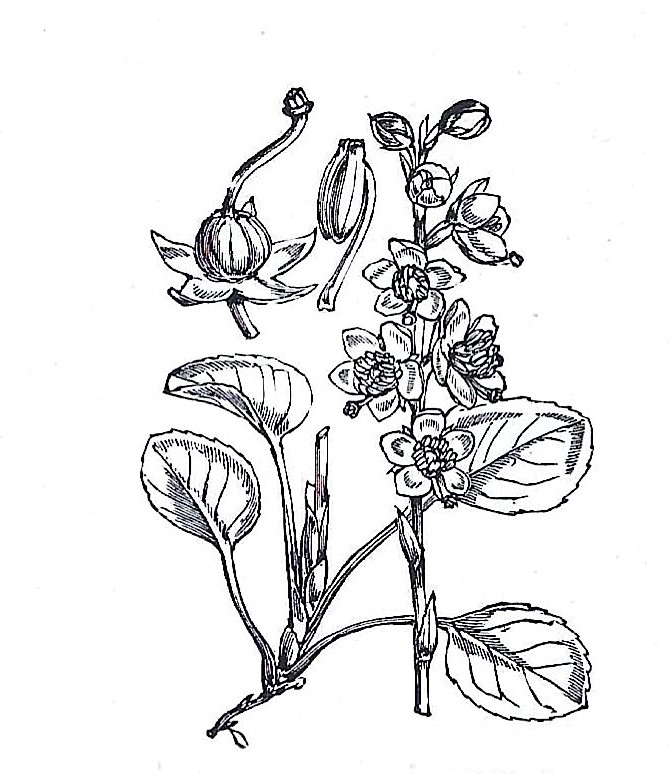 Yesterday I did a little bit of botany amongst the dunes of Anglesey. Amongst the plants I found was round-leaved wintergreen, Pyrola rotundifolia. My grandmother, who grew up in the pre-war period in that part of the world, always said she and her friends called this particular wintergreen species ‘faecock’ (alluding to the wee magic folk who lived in the dunes).
My grandmother passed away back in the early 90s, but had grown up on a farm on Anglesey in the 1920s/30s, close to Newborough. The forest there was planted just after World War 2 to help stabilise the dunes, that were prior to this mobile and constantly inundating Newborough; so the dune system was far more expansive and changeable. As I remember it round-leaved wintergreen grows in more stable areas of the dune system along with other plants, so sticking to those areas meant you were on relatively stable paths and tracks and therefore unlikely to get turned around.
The story was that the magic folk that lived in the dunes were responsible for moving the dunes and changing the paths and getting people lost. I guess there was a practical reason to stay on the paths as it would stop you getting lost and also protect the vegetation which was helping stabilise some areas, so my grandmother and her friends were told not to step on the faecock otherwise they might incur the wrath of the fairies and end up lost to the dunes. Because the plant is an evergreen it would work all the year round.
As I think about it more I think actually the fae folk were protecting the paths from other magic creatures that were moving the paths and dunes. Stepping on the plants would anger the fairies and they would leave those paths and those areas unprotected and at the mercy of more malicious creatures living in the dunes.
Comments and examples of similar beliefs would be greatly appreciated; please send them to roy@plant-lore.com
Images: main, © Matthew Osland Barker; inset, W.H. Fitch & W.G. Smith, Illustrations of the British Flora, ed. 5 (1949).
27 July 2025

 DISCLAIMER: The cures and other uses on this site are recorded as they were received.