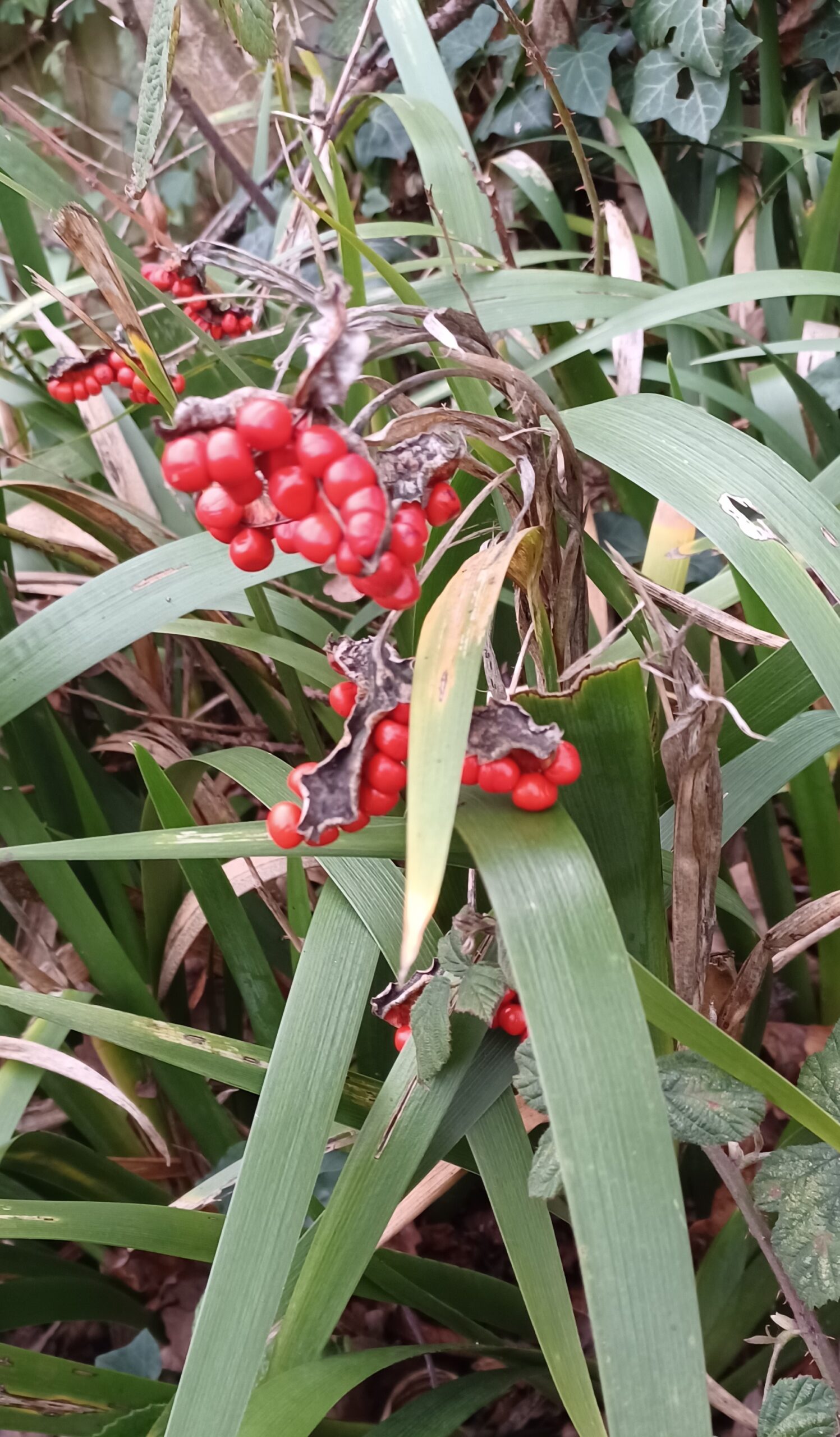
 The adder, Britain’s only venomous snake, is associated with various plants which are, or are suspected of being, poisonous. Fleshy, vividly coloured fruits which are believed to be poisonous were frequently given such names as adder’s meat, or adder’s food.
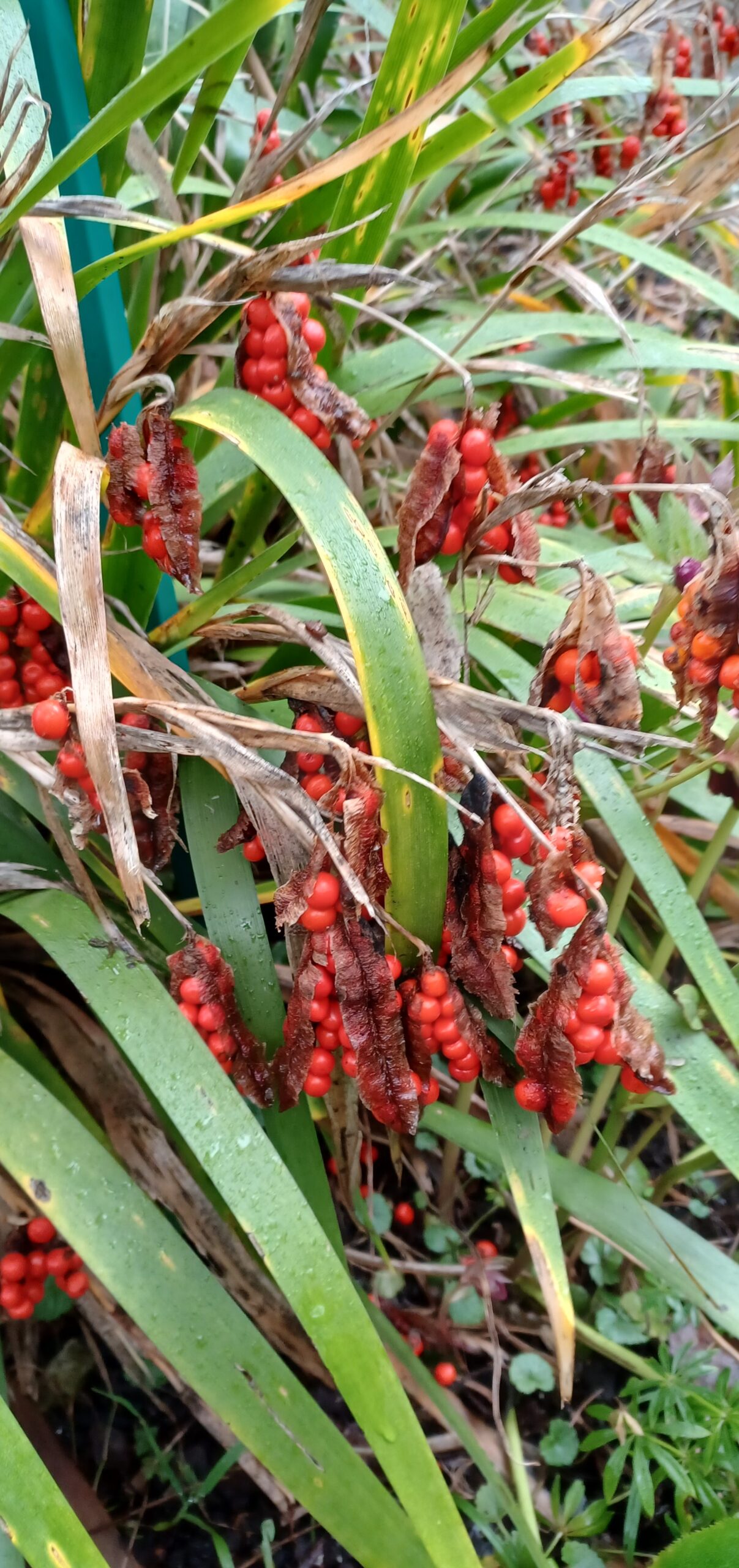
In Devon the fruits of stinking iris (Iris foetidisssima) and black bryony (Tamus communis) were known as adder’s meat; elsewhere the name was given to the fruits of lords-and-ladies (Arum maculatum). Other plants given the name include the widely feared cow parsley (Anthriscus sylvestris) – cf. mother-die, elsewhere on this website – in Somerset, and dog’s mercury (Mercurialis perennis), which is toxic to humans and many other mammals, in Hertfordshire.
However, according to A.S. Macmillan, in his Popular Names of Flowers, Fruits, etc. (1922), which lists plant-names recorded in Somerset and adjacent counties, the name adder’s food is:
‘given to red to the red berries of a number of plants, which are poisonous or supposed to be so, particularly those of wild arum [lords-and-ladies], the [stinking] iris, bryony, etc. The word adder in this and most [plant-names] … has nothing to do with snakes and reptiles at all. It is neither more nor less than the Anglo-Saxon word attor, which means poison. Attor-berries, meaning poison-berries (the very name still used in Sussex) was changed first to adder berries, then to adder’s food or adder’s meat, and finally in many cases to snake’s food.’
Adapted from Roy Vickery, Vickery’s Folk Flora (2019).
Images: stinking iris, main, cultivated, South London Botanical Institute, February 2026; inset, Woodfield, Tooting Common, both London Borough of Lambeth, December 2025.
7 January 2026; updated 12 February 2026
 DISCLAIMER: The cures and other uses on this site are recorded as they were received.