Sixth and final installment of plant-lore notes received from Patrick Duffy, of Ballymote, Co. Sligo, in May 1994:
‘Before winding up … I would like to refer you to two of the most versatile plants known to man since primitive times, namely the common rush [Juncus] and the sally [Salix] rod. The sally rod you will know is a sapling of the willow species. Also known as osier, or sallow. For centuries man has used it for scallops to thatch his house. It has been used to make baskets, creels, chairs, walls, cradles, etc. In the Western World it has been used since the dawn of civilisation to chastise and discipline countless generations of children from the cradle to to the classroom floor, and in some cases for long afterwards. There was an old saying ”Spare the rod, spoil the child’.
Equally useful down the through the years has been the humble rush. The cave-man is said to have insulated his abode with rushes and probably made his bed with them. When man got around to building a cabin for himself he, most likely, would have thatched it with rushes. When he came to grow vegetables he would have conserved them over the winter months by covering them with rushes. When he came into the possession of livestock he probably constructed shelters and roofed them with rushes. He used the rush candle to light his cabin. He would, I should think, worn a rush hat, and over swampy terrain used vast amounts of rushes to construct passageways for walking.
Many people alive today will remember seeing houses being thatched with rushes and bound with scallops during the early part of this century.
Let’s pause for a moment and consider that this has been going on since primitive times. This will give us some idea as to how much man owes for his survival to the common rush and the sally rod.
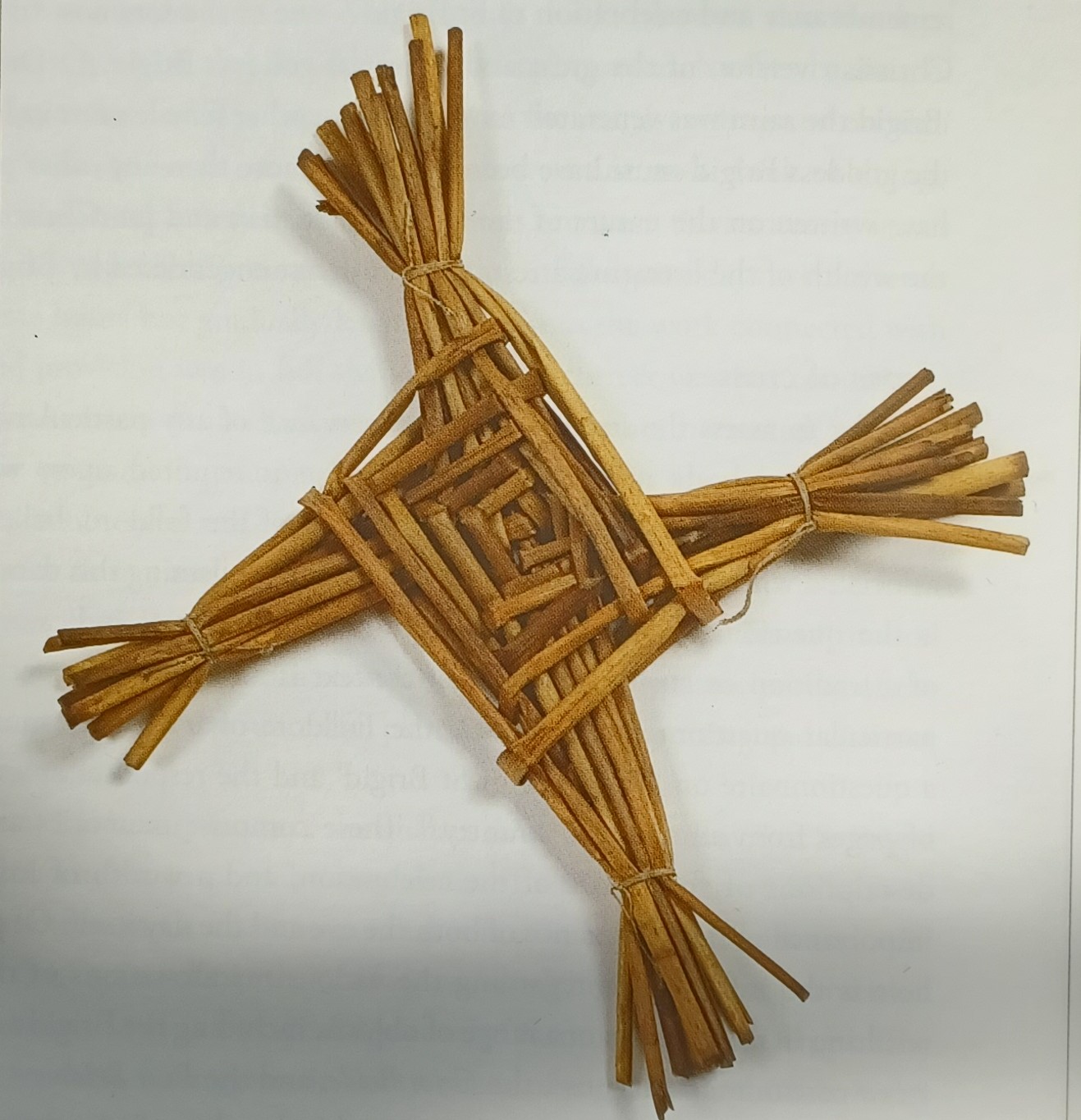
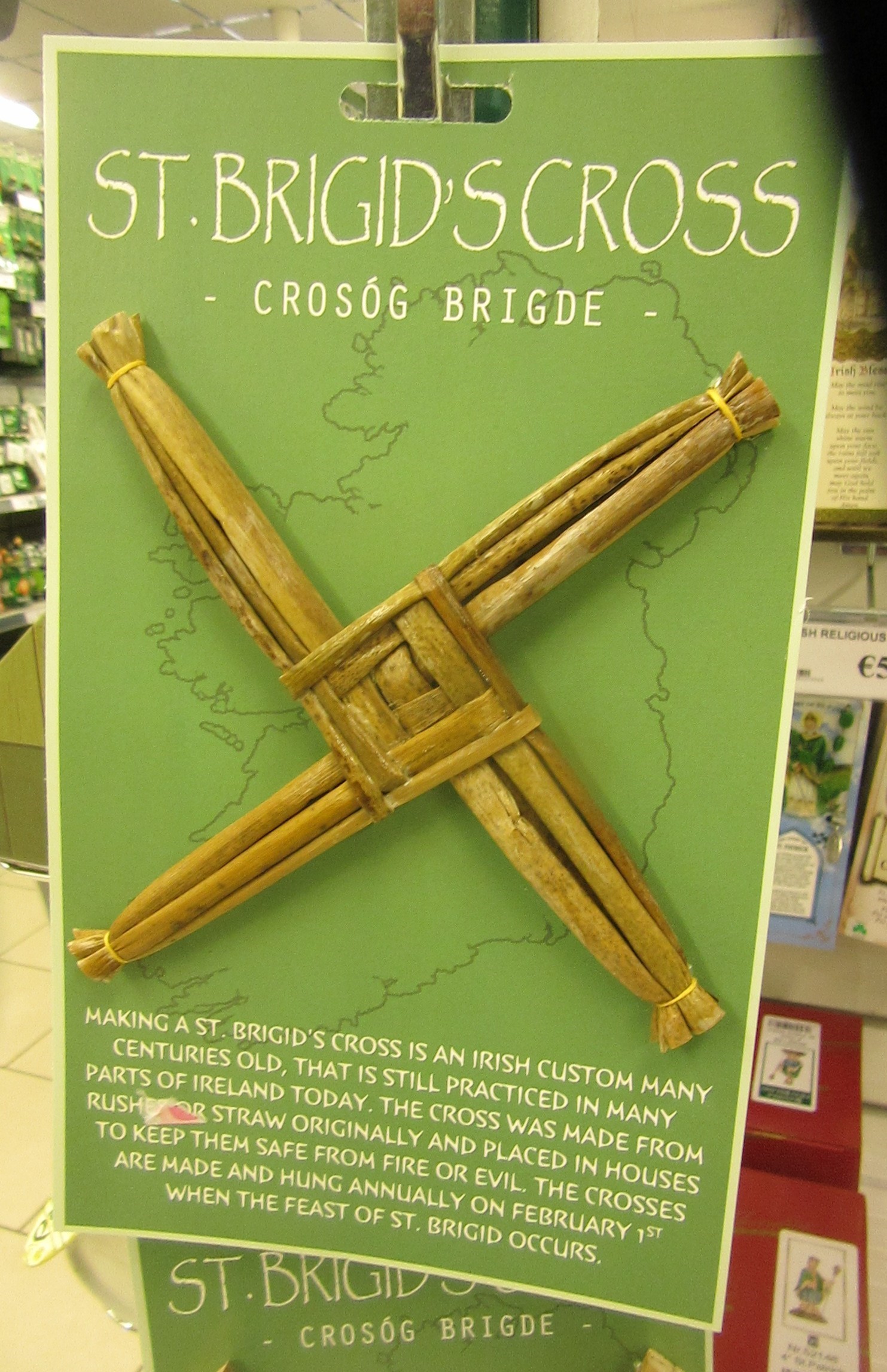 On the first day of February every year children in rural parts of Ireland go out into the fields and collect rushes for making St Bridget’s crosses which today is a symbol of R.T.E.
Sprigs of heather [Calluna vulgaris] bound together have been used for centuries to make brooms and whitewashing houses.
Daisies [Bellis perennis] have been used by children to make daisy chain.’
Images: main, St Bridget/Brigid’s cross made from rushes, Confert, Co. Cork; from Anne O’Dowd, Straw, Hay & Rushes in Irish Folk Tradition, 2015; inset, cross on sale in Dublin, 2017.
2 May 2026
 DISCLAIMER: The cures and other uses on this site are recorded as they were received.