Burdock, Arctium spp., plants or leaves are frequently featured in the foreground of paintings. The example here shows a detail of ‘The Large Dort’, by the Dutch artist Aelbert Cuyp (1620-1691), now in the National Gallery, London. Does anyone have any idea why many artists prominently featured this plant?
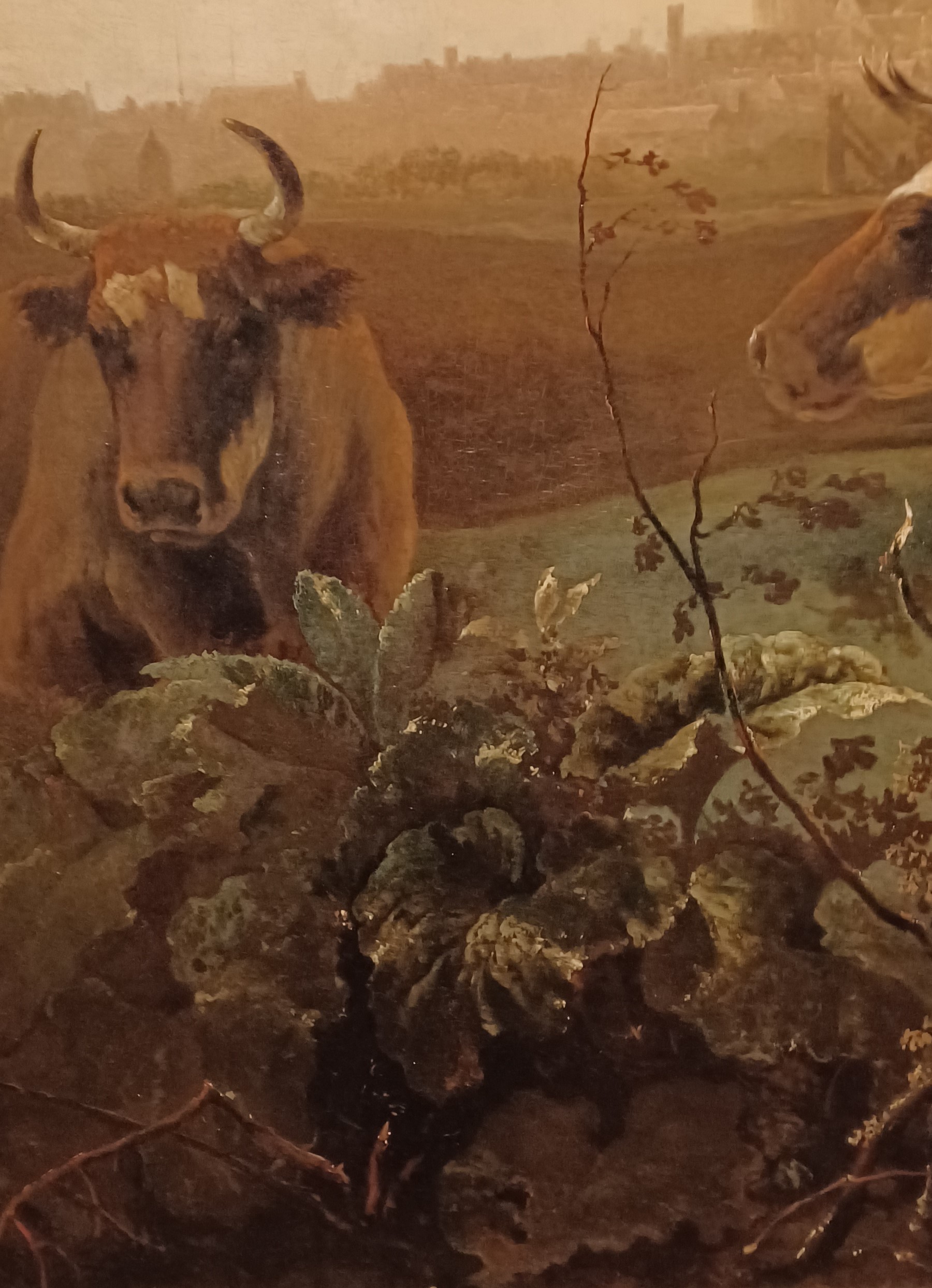
When the National Gallery was asked why this was done, they suggested that the question should be addressed to the Royal Botanical Gardens, Kew. When Kew was questioned they replied that the National Gallery should be asked. So your suggestions would be greatly appreciated; please send them to roy@plant-lore.com
Response: Thanks again to the indefatigable Jane Lawson, who has drawn to our attention the chapter on burdock in Richard Mabey’s Weeds (2010). Here he notes that burdock first started appearing in Dutch paintings of the seventeenth century, the plants being typically placed in the bottom right-hand corner. The tradition continued through to the eighteenth century, appearing in paintings such as those by Thomas Gainsborough (1737-88), and Mabey suggests ‘what burdock suggests in these pieces is that beauty can reside in the uneven and the asymmetrical – the idea of weediness, in fact’.
Updated 26 June 2025; edited 7 July 2025.
 DISCLAIMER: The cures and other uses on this site are recorded as they were received.