In May 1994 we received from Patrick Duffy, of Ballymote, Co. Sligo, four foolscap pages listing ‘some of the old stories of plant folklore’ which he had ‘become acquainted with down through the years’. This article is the first of a number of extracts from the material which Mr Duffy so generously provided.
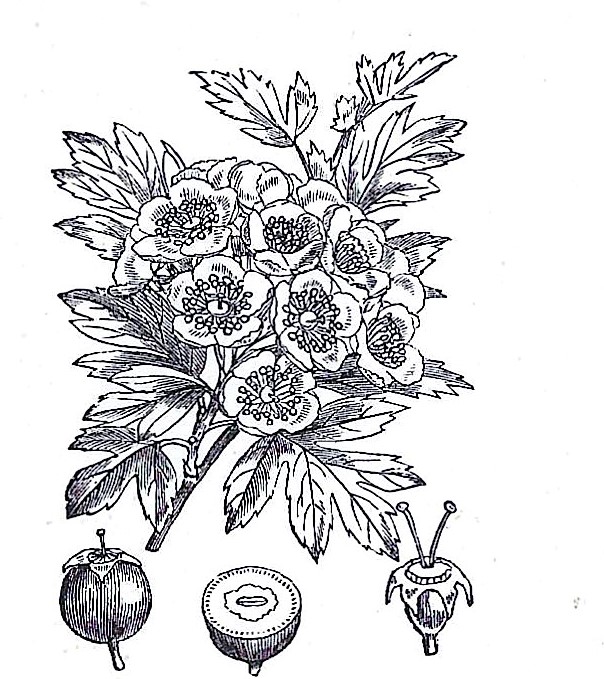 ‘It is unlucky to take into your house the blossoms of the hawthorne [Crataegus monogyna], the bluebell [Hyacinthoides nonscripta], the foxtail, also known as here as fairy fingers [foxglove, Digitalis purpurea]. It is also regarded as unlucky to take into your hands the ragwort [Jacobaea vulgaris] plant also known as boholaún. In rural Ireland you were likely to be reminded, not to strike a beast with boholaún, or a stick taken from a boor-tree [elder, Sambucus nigra], as this action would bring misfortune to the beast. There was an old saying around here ”Don’t call it a weed, though a weed it may be, ’tis the horse of the fairies the boholaún buidhe (yellow)” [1].
 Easter lilies [Zantedeschia aethiopica] have long been regarded as a symbol of the republican movement in Ireland.
Primroses [Primula vulgaris], or mayflowers, always used here to decorate the May altar, dedicated to our Blessed Lady.
The red rose [Rosa cv.] a symbol of the workers’ movement.
Poppies [Papaver rhoeas] a symbol of charity. Roses a symbol of love. The lylack [lilac, Syringa vulgaris] a symbol of romance.
All rose plants are regarded as as symbols of love and fellowship.
1. see Ragweed nags elsewhere on this website.
Images: main, part of Mr Duffy’s list; upper inset, hawthorn; lower inset, primrose; both from W.H. Fitch & W.G. Smith, Illustrations of the British Flora, ed. 5 (1949).
20 February 2025.

 DISCLAIMER: The cures and other uses on this site are recorded as they were received.