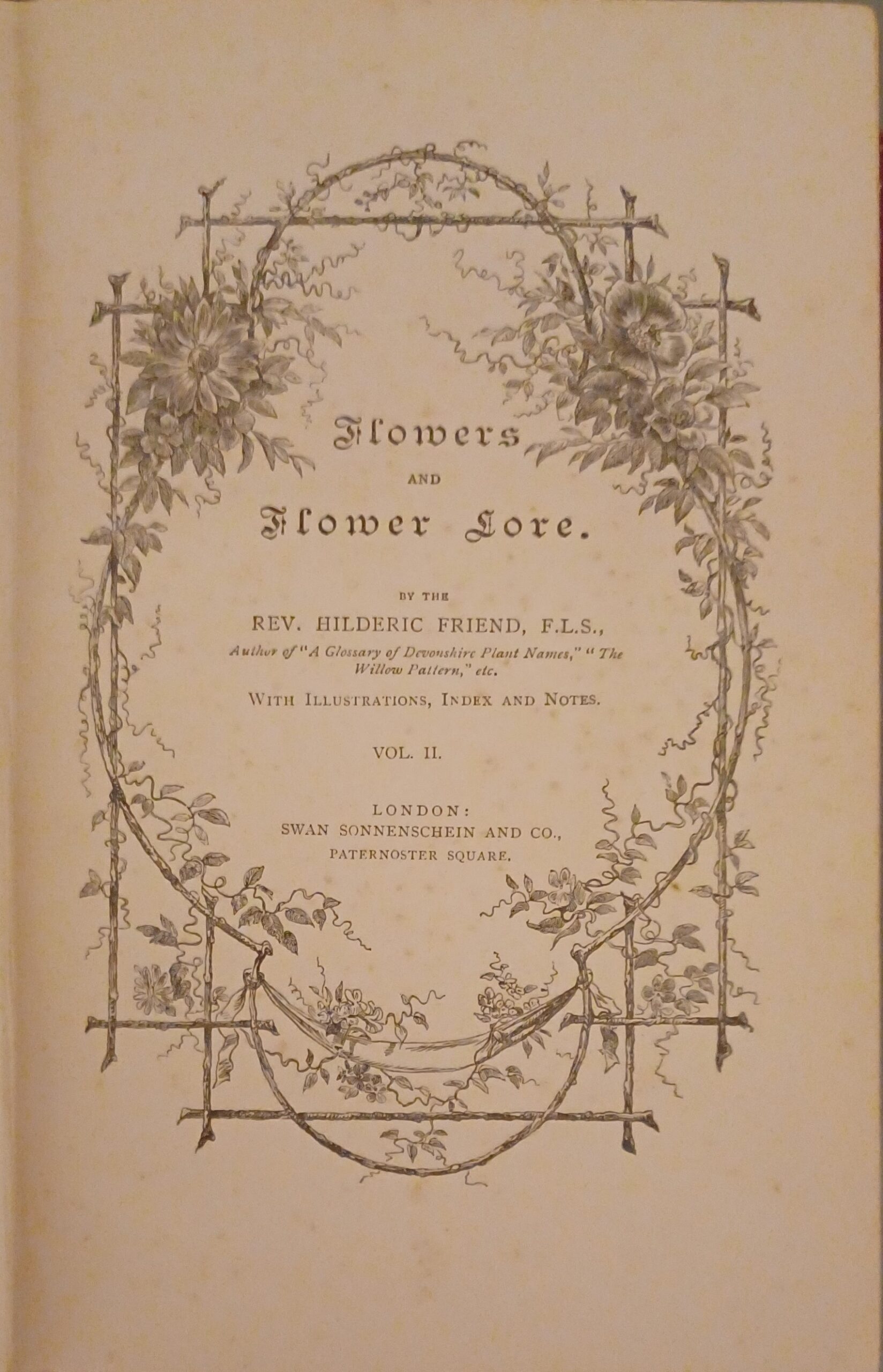
 As far a plant-lore goes Hilderic Friend is best remembered for his Glossary of Devonshire Plant-names (1882) and his Flowers and Flower Lore (1884), but he wrote on a wide range of other subjects, being described in 1926 as ‘widely travelled, widely read [and] gifted with a wonderful memory’ [1].
Friend was born in Great Wigsell, East Sussex, his father being ‘a progressive farmer and hop-grower’, on 6 November 1852. From 1874 he studied at the Richmond Theological College, to become a Methodist (Wesleyan) minister. In 1876 he left to serve as a missionary in China, but ill health forced him to return to England in 1880. His first posting after his return as at Newton Abbott in Devon: ‘My health being terribly broken, and I was obliged to live as much as possible in the open air. I found myself surrounded with beauty. Every hedgerow around my home bristled with plants which were as charming as many of them were rare’ [2].
Here he started his study of plants, leading to his Glossary of Devonshire Plant-names which was produced within two years, and published when he was 30.
Only two years later he produced his Flowers and Flower Lore, an impressive work which ran to over 700 pages, including a comprehensive 42 pages of ‘critical and bibliographical notes’ and a further six pages of ‘additions and corrections’, both of which show the wide range of sources which he consulted, and absorbed, during his writing. Although Flowers and Flower Lore is in many ways typical of its time, it is enlivened and enriched by its author’s observations and recollections of conversations with country-people. He did not regard plant-lore as remnants of the past, but was alert to possible new developments, such as the increased planting of commemorative trees, the growth in the use of funeral wreaths, and the establishment of Primrose Day.
 However, by 1890 his interests had changed and he became increasingly interested in earthworms, becoming, at least in his own eyes, a leading authority on the group, though his work is considered to be of little value today, and most of the new species he described are not considered to be valid. (The current ‘British Isles Earthworm Checklist’, produced by the Earthworm Society of Britain, lists no species named by Friend, implying that all his supposedly new species names were synonyms of already described ones).
Friend retired from the ministry in 1914, but continued his earthworm studies and was a regular contributor of minor articles to Gardeners’ Chronicle and elsewhere (an obituary stated that he published ‘several thousands of articles’ [3]), but does not seem to have taken further interest in plant-names and plant-lore. He died, aged 87, on 7 February 1940.
1. Gardeners’ Chronicle, 23 January 1926: 56. 2. H. Friend, The Flowers and their Story, 1907: 189. 3. Nature, 16 March 1940: 414.
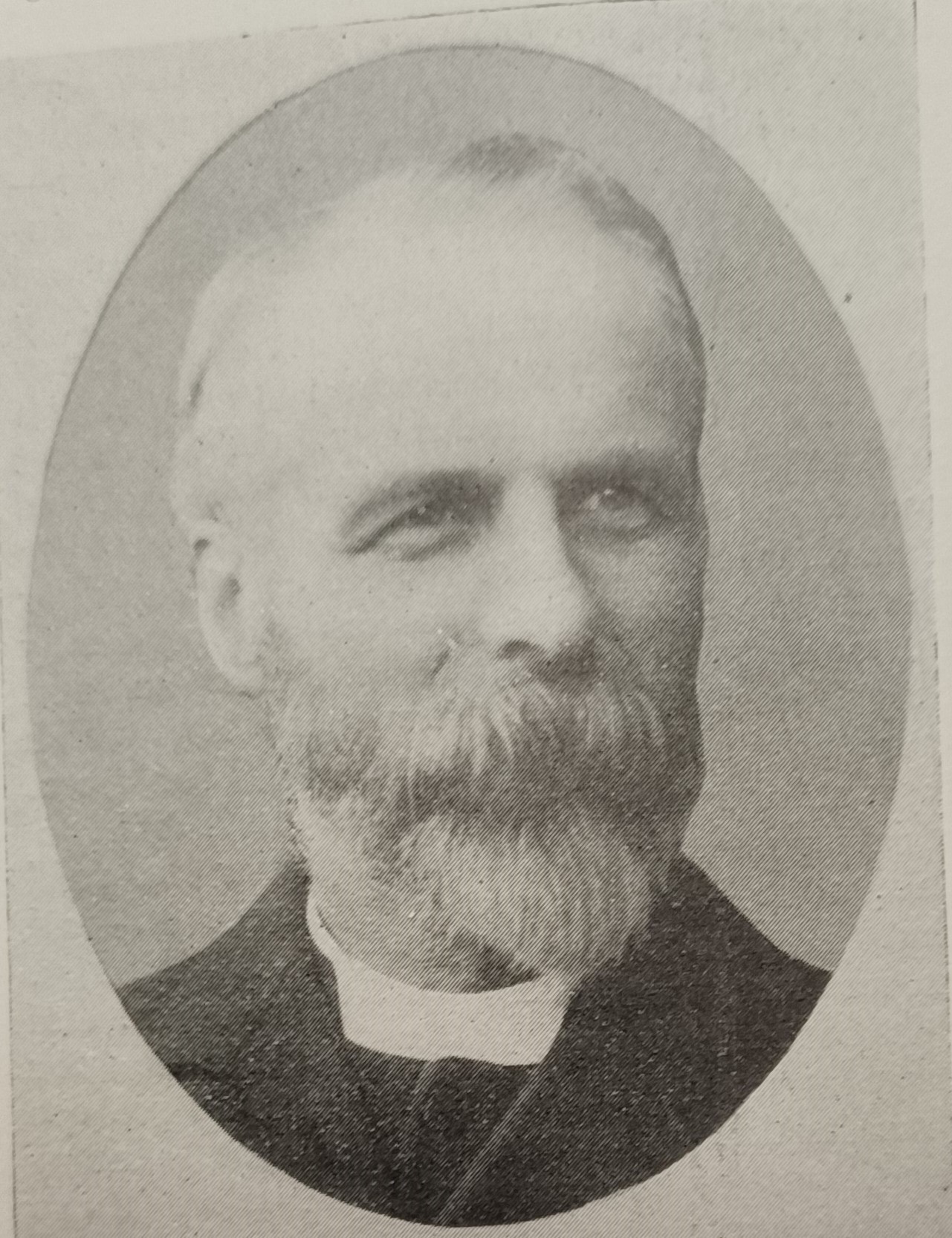
Images: main, portrait in Gardeners’ Chronicle, 23 January 1923; upper inset, title page of second volume of Flowers and Flower Lore; lower inset, The Flowers and their Story, a book written by Friend for children, n.d., but first published in 1907.
31 January 2025
 DISCLAIMER: The cures and other uses on this site are recorded as they were received.